The two ideas behind MDE
Engineering Knowledge. AI can write code. MDE gives it organized, explicit knowledge about the business and about engineering the application correctly: requirements, Meta-models, Features, Targets, industry patterns, design, and Architecture.
Verification & Evidence. AI saying an application works is not proof. MDE verifies important requirements and engineering claims, then preserves the results as Evidence.
Requirements + Engineering Knowledge
                 |
                 v
                AI
                 |
                 v
            Application
                 |
                 v
           Verification
                 |
                 v
              Evidence
1. Start with the business
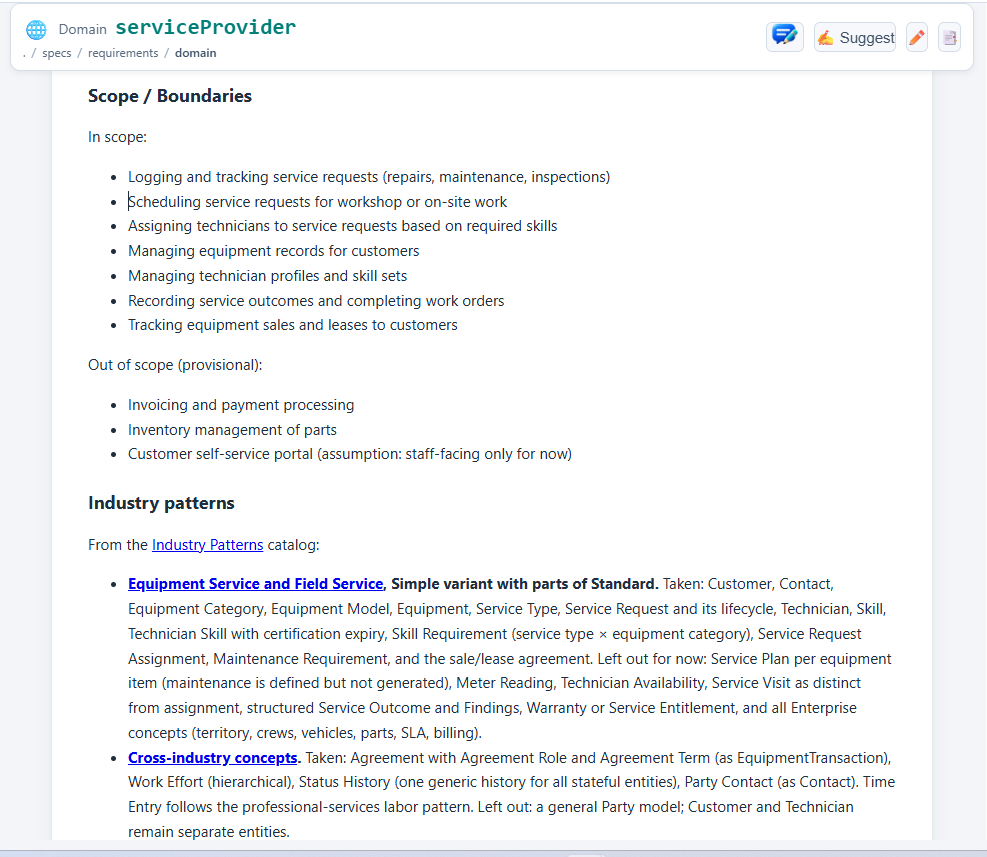
The ServiceProvider example begins with a real business domain rather than a list of screens. AI identifies the business concepts, relationships, workflows, roles, and rules that matter.
2. Make the conceptual model explicit
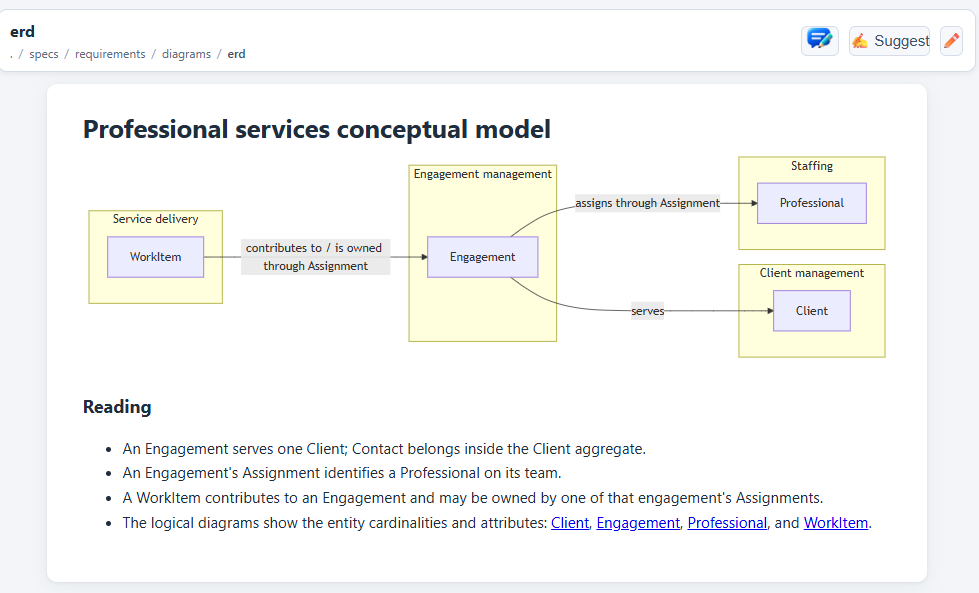
MDE turns the business story into durable specifications. The conceptual model lets you inspect what AI believes the business contains before implementation begins.
3. Add reusable engineering knowledge
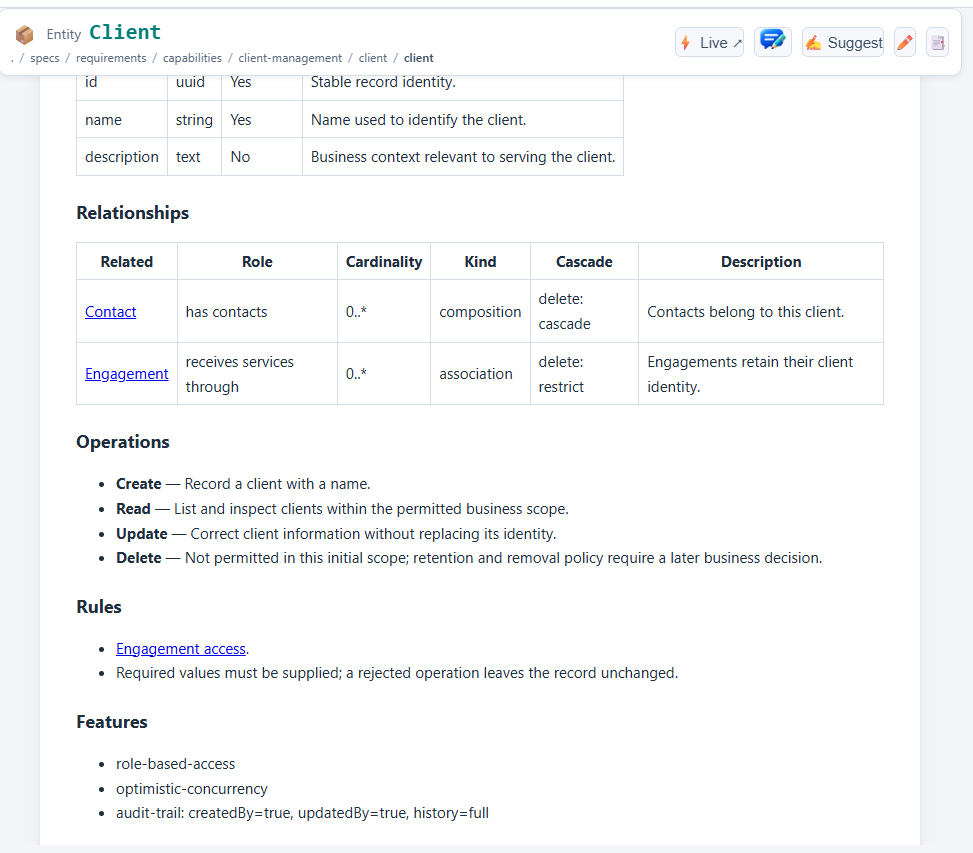
An entity is more than a data structure. Its specification can include relationships, operations, business rules, and applicable engineering Features. Features give AI reusable knowledge for concerns such as authorization, history, concurrency, validation, and auditability.
4. The Meta-model helps AI understand the specifications
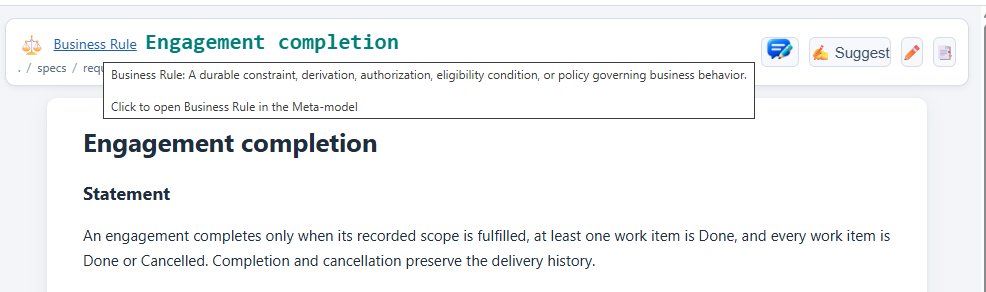
The Meta-model defines the language of application knowledge: what an Entity, Business Rule, Use Case, Role, relationship, and other concepts mean. This makes the specifications understandable to both people and AI.
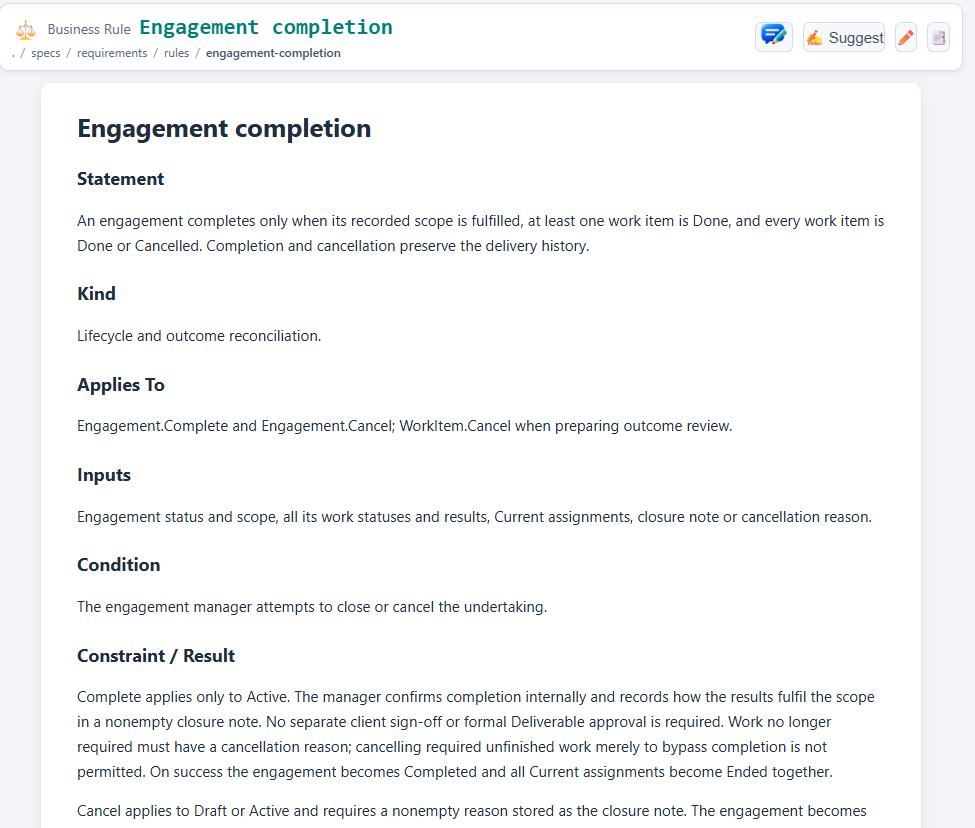
5. Review business rules
Important behavior is explicit rather than buried in generated code. Business rules become part of the durable application knowledge and later provide claims that can be verified.
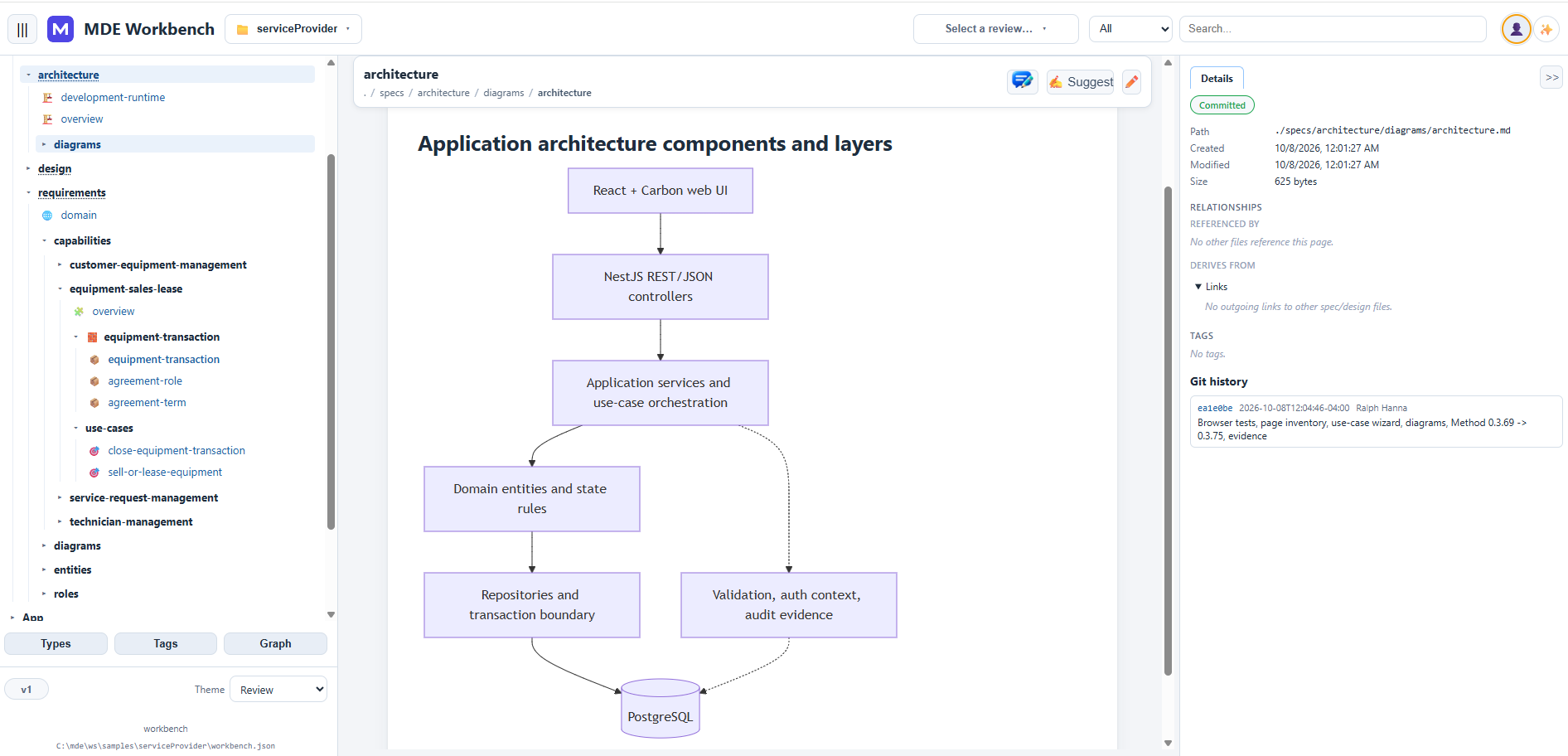
6. Review the Architecture
Architecture defines how the application will be engineered: technology choices, structural responsibilities, persistence, APIs, integrations, and other durable decisions. Strategy guides the work; Architecture constrains what is built.
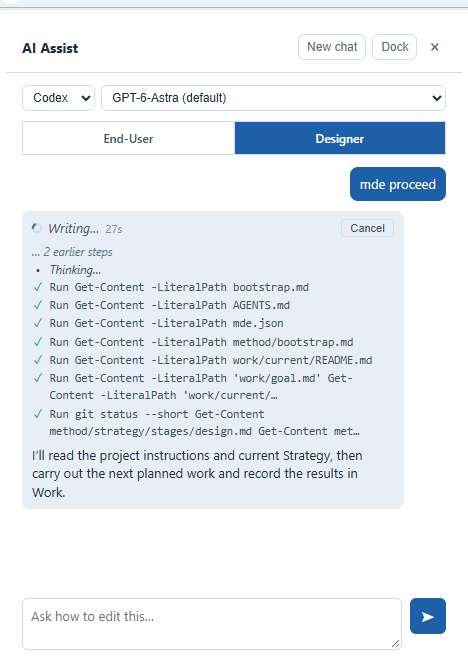
7. AI works with the Method
The AI agent reads the current Goal, selected Strategy, relevant Specs, and applicable Targets. It does not need to invent an engineering process for every prompt. MDE supplies the context and reusable engineering knowledge needed for the work at hand.
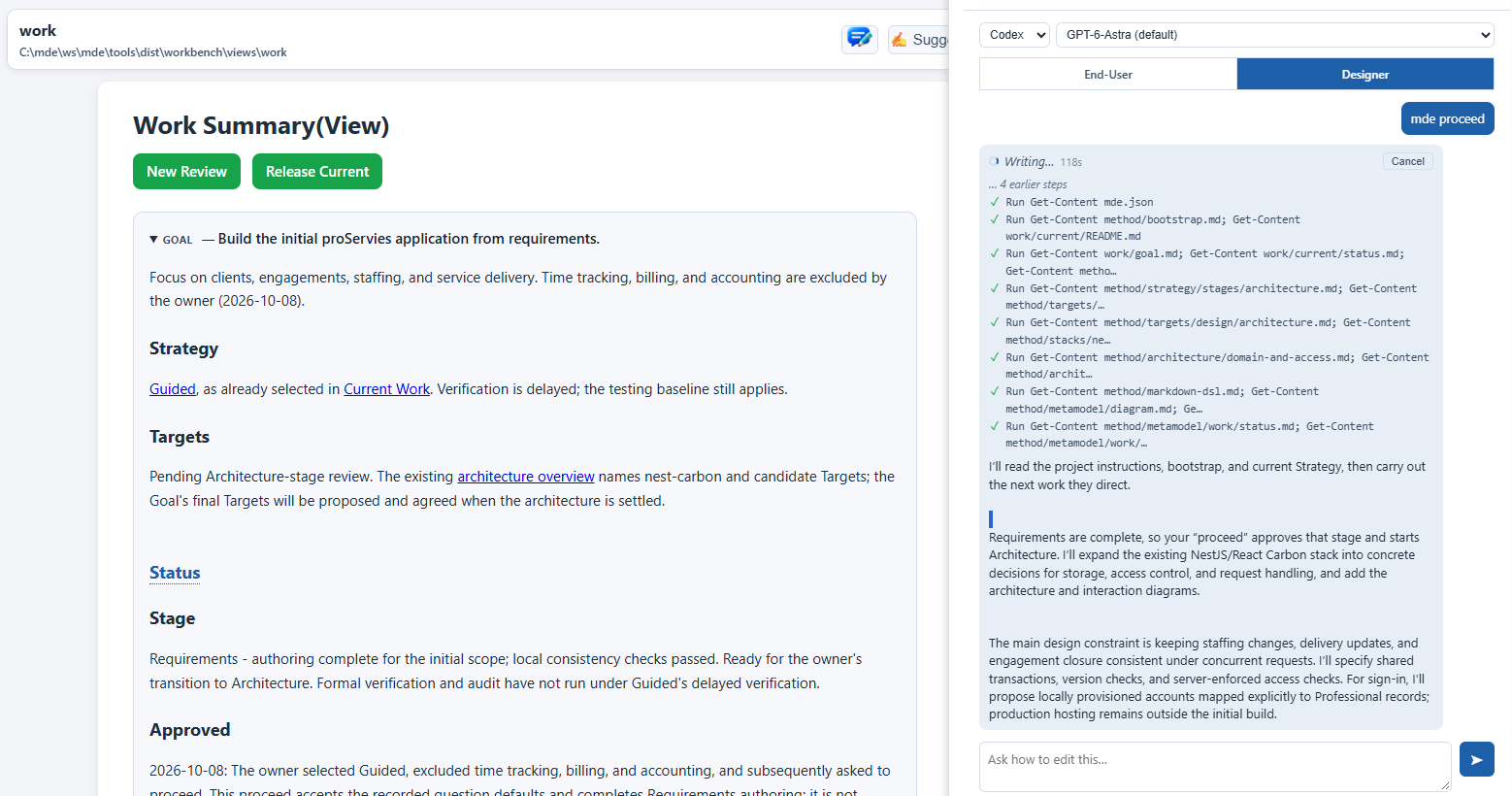
8. Goal, Strategy and Targets guide the work
The Goal says what outcome is wanted. Strategy governs how the work is approached. Targets describe what satisfactory engineering outputs look like. Together they let MDE vary the rigor without losing engineering intent.
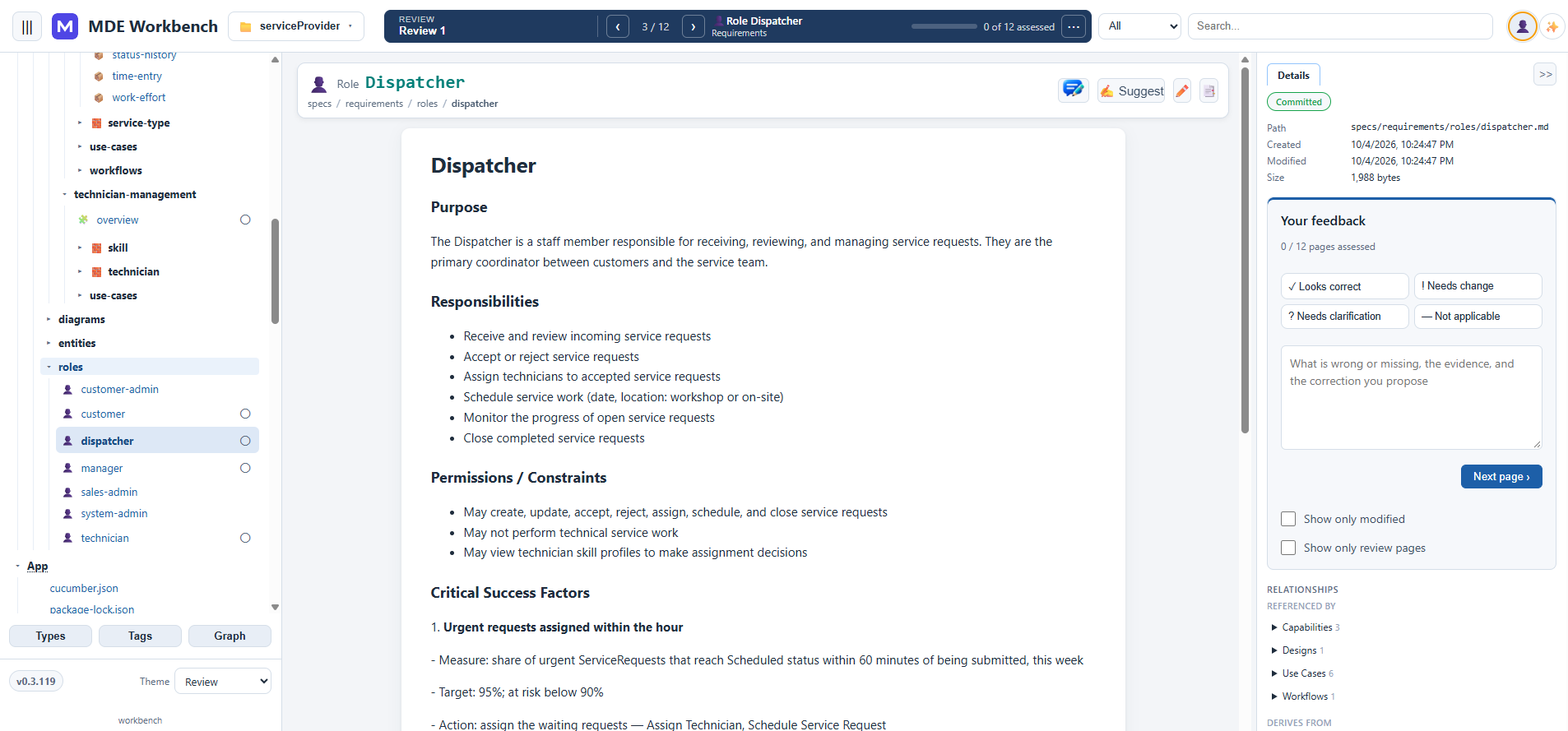
9. Review before proceeding
The user remains in control. Requirements, Design, and Architecture can be reviewed before they become implementation decisions. Review is not ceremonial: it is where misunderstandings can be corrected while they are still inexpensive.
10. Build the application
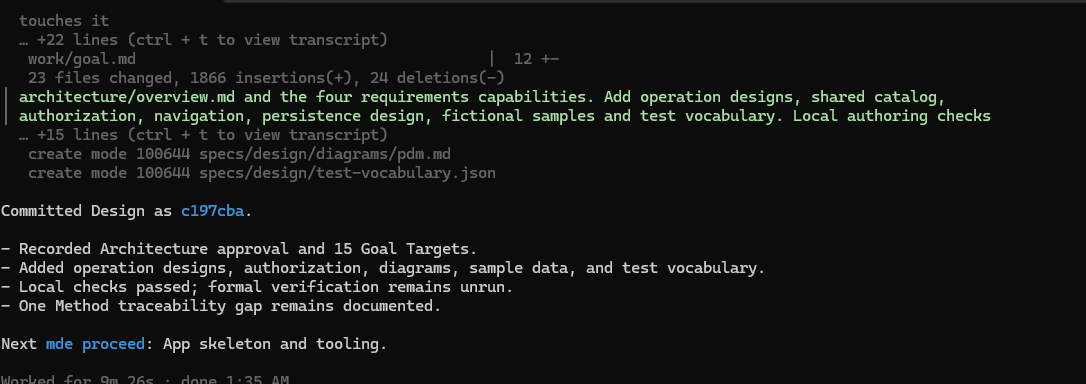
Once the relevant knowledge and decisions are established, AI implements the application according to the selected Architecture and Method. The objective is not generic generated code; it is an implementation traceable to the specifications that guided it.
11. Verify it
A generated application is not finished simply because it runs. Verification can exercise business rules, APIs, persistence, browser workflows, authorization, security expectations, engineering Features, and Architecture conformance.
Executed verification / test results
12. Preserve the Evidence
Evidence records what was actually demonstrated. It can include test results, browser screenshots, requirements coverage, database checks, Architecture audits, findings, failures, and waivers. An unrun check is never presented as passed.
Evidence package / verification report
LIMITED-TIME OFFER
Challenge MDE
Give us your requirements. We'll deliver a production-quality application.
Bring us a useful, real business application. Your requirements can be formal or informal—the material helps AI understand your business.
You stay in control
- Requirements Review — review what AI understands about your business.
- Design Review — review how the application is expected to work.
- Architecture Review — review how the application will be engineered.
- Build — MDE guides AI in producing the application.
- Verification & Evidence — the application is fully tested and you can see the evidence.
See what AI believes about your business before that understanding becomes code.
Production quality, not a toy
The Challenge is for useful business applications with real users, workflows, information, rules, or decisions. It is not intended for games, student projects, programming exercises, or toy applications. Submissions are selected based on business value, suitability, and reasonable scope.
What you give us
Tell AI what your business does, what problem the application should solve, who will use it, what they need to accomplish, and what business rules matter. Add whatever material you already have—documents, forms, spreadsheets, diagrams, screenshots, or existing requirements.
You do not need to turn it into a software specification first. That's part of MDE's job.
What you get
Your Requirements
       |
Requirements Review
       |
Application Design
       |
Design Review
       |
Architecture
       |
Architecture Review
       |
Production-Quality Application
       |
Complete Verification
       |
Evidence
Give AI your business requirements. Review what it understands. Review what it designs. Review how it will be built. Then judge the finished application—and the evidence.